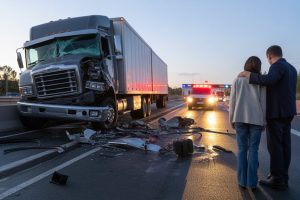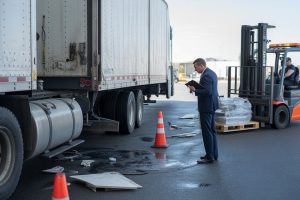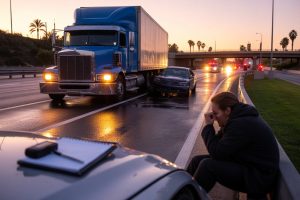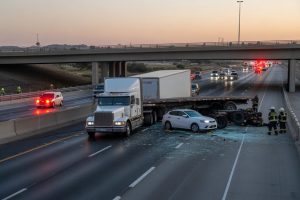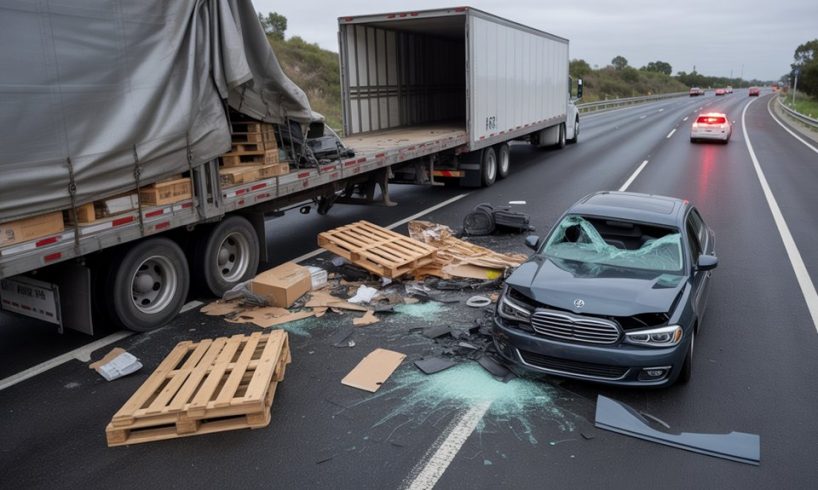
Like a dropped brick in a crowded room, a cargo spill on the 57 Freeway can turn routine travel into chaos in seconds. If you’ve been hit by an unsecured load, you may know the crash was avoidable, but proving negligence takes more than suspicion. You’ll need the right evidence, the right records, and a clear link between the loading failure and your losses—because the next detail can change everything.
Main Points
- Unsecured loads on the 57 Freeway often result from poor tie-downs, overloaded trailers, faulty equipment, or skipped inspections.
- Cargo spills can cause debris, sudden lane blockages, and chain-reaction crashes involving nearby vehicles.
- Negligence claims may involve the driver, carrier, employer, shipper, or loading crew when unsafe loading caused the accident.
- Strong evidence includes photos, witness statements, police reports, maintenance logs, shipping records, and dashcam footage.
- California rules require cargo to be tied down, covered, balanced, and rechecked to prevent shifting or spilling.
What Causes Cargo Spill Accidents on the 57 Freeway?
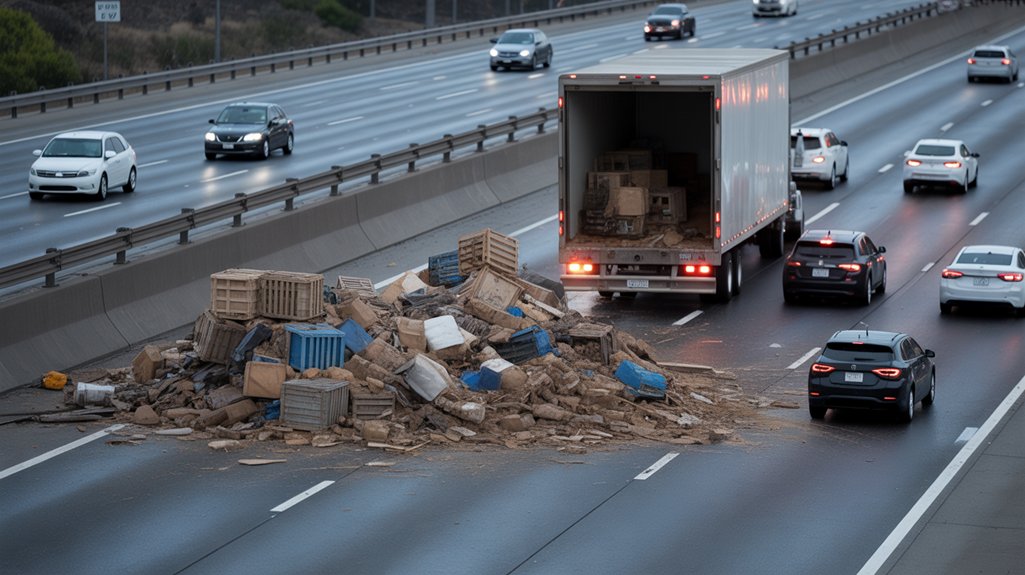
Cargo spill accidents on the 57 Freeway usually happen when a load isn’t properly secured, inspected, or balanced before a truck gets on the road. You may see cargo shift when straps wear out, tie-downs loosen, or a driver skips a pre-trip check.
Overloaded trailers can also strain equipment and make freight unstable. In some cases, poor loading by warehouse crews creates uneven weight, so items move during turns, braking, or lane changes.
Broken gates, faulty containers, and ignored maintenance problems can worsen the risk. Bad weather and sudden traffic stops may expose these mistakes, but the real cause is often careless preparation.
When you’re dealing with a spill, you need to look at who loaded the truck, who inspected it, and whether safety rules were followed.
How Unsecured Load Accidents Lead to Serious Crashes
When a load comes loose, you can face flying debris that shatters windshields or strikes nearby vehicles.
You can also hit sudden lane obstructions that force abrupt braking or swerving.
Those dangerous moments often spark chain reaction collisions that turn one spill into a multi-car crash.
Flying Debris Hazards
Flying debris from an unsecured load can turn a routine drive on the 57 Freeway into a sudden, violent crash.
When cargo shifts or breaks loose, you may face boxes, tools, furniture, or construction material striking your windshield or hood without warning. Even a small object can shatter glass, distract you, and force you to swerve hard.
That split-second reaction can send you into another car, the center divider, or a guardrail. Larger debris can damage tires, headlights, and steering components, making control even harder.
If a driver failed to secure the load properly, you may have a clear negligence claim. You should document the debris, vehicle damage, and scene conditions, because those details can help show how the flying object caused your crash.
Sudden Lane Obstructions
Unsecured loads can also create sudden lane obstructions that leave you with almost no time to react. When cargo falls onto the 57 Freeway, you may face a blocked lane, a stranded object, or a full-width roadway hazard. You can’t count on other drivers to see it in time, and you may need to brake or steer sharply. That split-second decision can put you at risk.
- Loose furniture can block your lane.
- Spilled materials can hide in plain sight.
- Large items can force abrupt swerves.
- Debris can stop traffic flow instantly.
- Poorly tied cargo can cause unsafe merges.
If a driver ignored securement rules, you may have a strong negligence claim.
Chain Reaction Collisions
One crash can quickly turn into many when debris from the 57 Freeway triggers a chain reaction behind you. You may slam on your brakes, but the driver behind you mightn’t react in time. Then another vehicle hits that car, and the pileup spreads fast across nearby lanes.
Unsecured cargo creates sudden hazards, forcing drivers to swerve, stop, or collide at highway speeds. You can suffer rear-end impacts, side-swipes, and multi-car crashes before traffic fully settles. These collisions often happen because one careless load shifted, spilled, or fell without warning.
If you were involved, you should document the scene, gather witness information, and preserve evidence of the debris. That proof can help show how the initial negligence caused every impact.
Who Can Be Liable for a Cargo Spill Case?
When you face a cargo spill case, you may be able to hold the truck driver liable if unsafe driving or improper securing caused the load to shift.
You can also look at the employer or carrier if they failed to train the driver, inspect the cargo, or enforce safety rules.
In many cases, more than one party shares responsibility for the crash.
Truck Driver Liability
Truck drivers can be liable for a cargo spill when they fail to load, inspect, or secure a load properly before hitting the road. If you’re injured, you can point to conduct that shows careless driving or poor cargo handling. A driver may be negligent when they:
- ignore weight limits
- skip tie-down checks
- overlook shifting freight
- drive too fast for conditions
- fail to stop after noticing a problem
You don’t need to prove intent; you only need evidence that the driver acted unreasonably. Photos, witness statements, and dashcam footage can help show what happened. When a truck’s load falls onto the 57 Freeway, the driver’s choices may directly create the hazard and support a claim for damages.
Employer And Carrier Responsibility
In a cargo spill case, the trucking company or carrier may also be liable if it hired an unsafe driver, failed to train workers properly, pushed unrealistic delivery schedules, or neglected to inspect equipment and securement procedures.
You can prove negligence by showing the company knew, or should’ve known, about those risks and still let the truck roll onto the 57 Freeway. If dispatch pressured the driver to skip rest, ignore tie-down checks, or haul an overloaded trailer, that helps show fault.
You may also hold the carrier responsible for bad maintenance, faulty loading practices, and poor supervision. In some cases, the employer shares liability with the driver because the crash grew out of company policies, not just one mistake behind the wheel.
What Evidence Proves Negligence After a Load Spill?
After a load spill, you prove negligence by tying the scene to the trucking company’s duty to secure its cargo and showing how it failed.
After a load spill, prove negligence by showing the trucking company failed to secure its cargo.
Use physical evidence to show careless loading, weak restraints, or missing tie-downs.
Photos of scattered cargo, damaged trailers, and skid marks can reveal what happened.
Maintenance logs may show worn equipment or skipped inspections.
Shipping records can expose overloaded or improperly stacked freight.
Cargo securement manuals can help compare required steps with what the crew actually did.
- Broken straps
- Loose tarps
- Overfilled pallets
- Shifting debris
- Damaged locks
When these facts line up, you can connect the spill to a breach of duty and support your claim for losses caused on the 57 Freeway.
How Police Reports and Witnesses Strengthen Your Claim
Police reports often give your claim an early foundation by recording the date, location, road conditions, lane closures, and the officer’s observations about the spill, damaged vehicles, or traffic hazards. You can use that neutral account to anchor your story and show what happened right away. Witnesses add another layer because they can describe the load falling, your reaction, and how traffic changed.
| Source | Value |
|---|---|
| Police report | Confirms key facts |
| Witness statement | Supports your version |
| Photos from bystanders | Show the scene |
When you collect names, badge numbers, and contact details, you make it harder for the insurer to dispute the crash. Together, these records help you prove negligence and connect the unsecured load to your losses.
Why Trucking Logs and Maintenance Records Matter
Trucking logs and maintenance records can expose whether the carrier ignored safety rules before the spill ever happened. You can use them to trace delays, skipped inspections, and repair gaps that may point to careless fleet management. They also help you test whether the driver followed required rest breaks and reported problems before hitting the 57.
Trucking logs and maintenance records can reveal skipped inspections, delayed repairs, and safety lapses before the spill occurred.
- Logbooks can show fatigue-related errors.
- Service records can reveal worn brakes or tires.
- Inspection sheets can confirm missing checks.
- Repair invoices can prove known defects.
- GPS or telematics data can support timelines.
When these documents line up, you can build a stronger negligence claim and challenge excuses about a sudden, unavoidable spill. If the carrier kept poor records, that weakness can also suggest they’d something to hide.
How California Load-Securing Rules Apply on the 57
When you’re on the 57 Freeway, California’s load-securing rules require cargo to be tied down, covered, and balanced so it won’t shift or spill.
You’ll often see violations like loose straps, overloaded trailers, or debris falling onto the road.
If a load breaks free, you can use those failures to help prove negligence.
California Load Securement Standards
California’s load-securement rules apply everywhere on the 57 Freeway, and they require drivers and carriers to make sure cargo is properly tied down, balanced, and contained before a vehicle gets on the road. You must use equipment and methods that hold your load steady under normal driving forces. California also expects you to inspect the cargo before departure and during transport when conditions call for it. These standards help prevent debris from entering traffic and causing collisions.
You can think of compliance as a safety duty, not a suggestion.
- secure the load against shifting
- cover loose materials when needed
- distribute weight evenly
- verify restraints before travel
- recheck after stops
Common 57 Freeway Violations
Common violations on the 57 Freeway usually involve preventable loading mistakes that leave cargo unstable or exposed. You might see trucks with loose tarps, broken straps, overloaded trailers, or items stacked above side rails. California rules require you to secure freight so it won’t shift, leak, or fall during travel.
| Violation | What you may notice |
|---|---|
| Loose tie-downs | Cargo sways or slides |
| Missing covers | Debris blows out |
| Overstacking | Loads lean or tip |
| Leaking materials | Wet spots on pavement |
| Uneven weight | Trailer sags or drifts |
If you drive the 57, these problems can turn a routine trip into a dangerous spill. You’ll also spot unsecured tools, crushed boxes, and broken gates after hurried loading. These violations often show up before a load hits the road.
Proving Load-Securing Negligence
To prove load-securing negligence on the 57, you need to show that the driver, trucking company, or loading crew failed to fasten cargo the way California law requires, and that failure caused the spill or falling debris.
You can build that claim by tying the crash to unsafe tie-downs, missing tarps, or overloaded trailers.
California rules expect loads to stay contained during normal driving.
- Inspect photos of the scene
- Preserve dashcam or freeway camera footage
- Review weigh station and inspection records
- Identify broken straps, chains, or gates
- Link the defect to your injury
If the truck violated these standards, you can argue negligence with stronger proof.
What Damages Victims Can Recover After a Spill
After a cargo spill, you can recover damages for the losses the crash caused, including medical bills, lost wages, vehicle repairs, and pain and suffering. You may also claim future treatment costs if your injuries need ongoing care, plus lost earning capacity when you can’t return to the same work.
| Damage type | What it covers | Why it matters |
|---|---|---|
| Medical costs | ER visits, rehab, medication | Pays injury-related care |
| Income loss | Missed pay and reduced earnings | Replaces wages you’ve lost |
| Property damage | Repairs or replacement | Restores your vehicle’s value |
You can seek compensation for emotional distress, too, when the spill leaves you anxious or unable to drive. If a spill damaged your clothes, phone, or other items, those losses count as well. Together, these damages help you rebuild after the crash.
How a Lawyer Investigates Cargo Spill Negligence
When a cargo spill causes a crash, a lawyer quickly digs into the facts to find out who failed to secure the load and why. You’ll see them review police reports, photos, and dashcam footage, then compare those details with shipping records and witness statements. They may inspect the truck, trailer, and restraints to spot broken straps, missing tie-downs, or overloaded pallets.
- check route and timing logs
- identify the shipper, driver, and carrier
- request maintenance and inspection records
- analyze loading procedures and training
- consult accident reconstruction experts
This investigation helps you connect the spill to careless conduct and identify every responsible party. By building a clear timeline, your lawyer can show how the load shifted, scattered, and triggered the crash.
What to Do After an Unsecured Load Accident
Once the investigation points to a cargo spill, your next steps matter for both safety and your claim. Move to a safe spot, call 911, and report injuries, debris, and lane hazards. Take photos of the truck, plates, cargo, skid marks, and road conditions before crews clear the scene. Get witness names, driver details, and the responding officer’s report number. Then seek medical care, even if you feel okay; hidden injuries can surface later. Notify your insurer, but don’t guess about fault or give a recorded statement without advice.
| Step | Why it matters | What you need |
|---|---|---|
| Document | Preserves proof | Photos, videos |
| Report | Creates record | Police, insurer |
| Treat | Protects health | ER, follow-up |
A lawyer can then protect evidence and build your negligence claim.
Frequently Asked Questions
Can a Passenger Car Driver Cause a Cargo Spill?
Yes, you can cause a cargo spill if you’re hauling or loading items improperly, or if your driving shifts unsecured cargo. You’re responsible for fastening loads safely, even in a passenger car.
How Long Do I Have to File a Claim?
You usually have two years to file, but you should check sooner; deadlines can change, evidence fades, and insurance claims may have shorter limits. Act quickly, protect your rights, and get legal help.
What if the Spilled Cargo Was Never Identified?
If you can’t identify the spilled cargo, you can still pursue a claim by proving another driver’s negligence through witness statements, photos, video, debris patterns, and accident reports. You don’t need the cargo’s owner to start.
Can Video From Nearby Traffic Cameras Help My Case?
Like a silent eyewitness, nearby traffic camera video can strengthen your case. You can use it to show the cargo spill, identify the vehicle, and prove negligence, but you’ll need to secure and preserve the footage quickly.
Do I Need to Report the Accident to My Insurer?
Yes, you should report it to your insurer promptly. You don’t have to admit fault, but you should share the facts. Delaying can hurt coverage, and your policy may require quick notice.
See The Next Post
After a cargo spill on the 57, you’re left with more than a damaged car—you’re left with questions. Who loaded it? Who checked it? Who let it roll loose? The truth often hides in straps, logs, and camera footage, but it can be found. If you act quickly and preserve the evidence, you can turn a dangerous mess into a strong negligence claim and fight for the recovery you deserve.