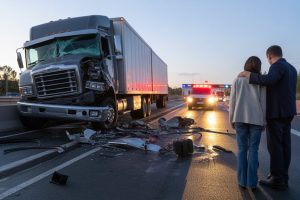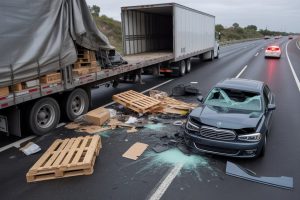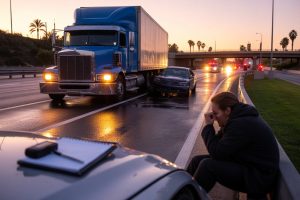
If an Amazon, FedEx, or UPS truck hits you in an Anaheim neighborhood, you’ll need to know who’s actually on the hook. The answer isn’t always simple, because fault, driver status, and layered insurance can shift payment from the driver to the carrier or even another company. Before you assume the claim is straightforward, there are a few details that can change everything.
Main Points
- Payment usually comes from the at-fault driver’s insurer, and often the carrier’s commercial policy if the driver was working.
- If another motorist caused the Anaheim crash, you pursue that driver’s insurance for medical bills, lost wages, and vehicle damage.
- Amazon, FedEx, and UPS liability may depend on whether the driver is an employee, contractor, or third-party worker.
- Multiple policies can apply, including auto liability, commercial coverage, umbrella policies, and contractual indemnity requirements.
- Preserve photos, witness names, police reports, dashcam footage, and delivery records quickly to prove fault and coverage.
Who Pays After a Delivery Truck Crash?
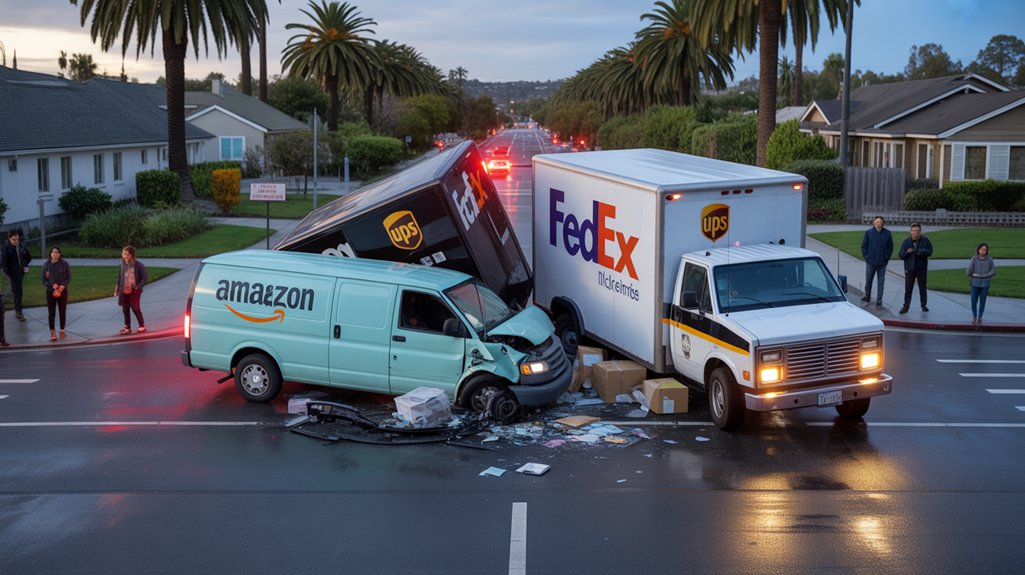
After a delivery truck crash, who pays depends on who caused the collision and what insurance coverage applies.
If the driver caused it, you may seek payment from that driver’s policy and, in many cases, the company’s commercial coverage. If another motorist caused the wreck, you’d pursue that person’s insurer instead. When road defects, unsafe loading, or poor maintenance play a role, you may have claims against the party that created the hazard.
Your losses can include medical bills, lost wages, vehicle repairs, and pain and suffering.
You shouldn’t guess at coverage or accept the first offer. You need to document the crash, preserve records, and identify every liable source so you can recover the full amount you’re owed.
Amazon, FedEx, and UPS Liability Rules
When you’re hurt in a crash involving Amazon, FedEx, or UPS, one key issue is whether the driver counts as an employee or an independent contractor.
That status can limit vicarious liability and change who you can hold responsible. You’ll also need to look at the contractor’s insurance coverage, since it may affect how much compensation you can recover.
Carrier Employment Status
Who pays after an Amazon, FedEx, or UPS truck crash often depends on whether the driver counts as an employee, an independent contractor, or works for a third-party delivery company. You should look at the driver’s job relationship first, because that label can change who’s financially responsible.
If the carrier hires the driver directly and controls the route, schedule, and work methods, you may have a stronger claim against the company. If the driver runs a separate business, the carrier may argue the contractor is responsible instead.
Third-party delivery firms can add another layer, since you may need to identify both the local employer and the national brand’s role. In Anaheim, you’ll want records, contracts, and delivery app data to sort out the real employer quickly.
Vicarious Liability Limits
Even if the driver is an employee, Amazon, FedEx, and UPS often fight liability by pointing to their franchise, contractor, or delivery-network structures.
You may still hold them responsible when they control routes, branding, training, or performance standards that shape how the crash happened.
Vicarious liability can extend when the company benefits from the delivery and directs the work, but it doesn’t automatically cover every wreck.
Your case gets stronger if you can show oversight, scheduling pressure, or company policies that pushed unsafe driving.
- You may feel anger when a big brand tries to distance itself.
- You may worry the truth will get buried.
- You may want accountability, not excuses.
- You may see how control creates responsibility.
- You may need fast legal action to preserve proof.
Contractor Insurance Coverage
Checking the insurance trail matters because Amazon, FedEx, and UPS often require contractors to carry commercial coverage, and those policies may be the first source of payment after a crash.
If a delivery driver hits you in Anaheim, you should ask whether the contractor had auto liability, general liability, and umbrella coverage in force. You may also find contractual indemnity clauses that push the insurer to defend and pay claims.
Don’t assume the company’s name on the truck means its own policy applies; many drivers work for independent businesses, and their insurance can control.
You should preserve photos, bills, and witness names, then demand policy details quickly because coverage disputes can delay payment. A lawyer can identify every available policy and pressure insurers to honor the contract.
How Delivery Driver Insurance Coverage Works
When you’re hit by a delivery truck, the driver’s own policy may be the first layer of coverage, but it often won’t be the only one.
You may also have employer coverage, business policies, and other layers that can apply depending on who owns the truck and who caused the crash.
If those sources don’t fully cover your losses, you can still look at third-party claim options to seek the rest.
Driver Policy Basics
Delivery driver insurance usually works in layers, and the policy that applies depends on what the driver was doing at the time of the crash. If you’re hit in Anaheim, you’ll need to know whether the driver was off duty, on a personal errand, or actively making a delivery. That status can change which insurance gets pulled in, and it can affect how fast your claim moves. You shouldn’t guess; you should document everything.
- You may feel overwhelmed after impact.
- Your injuries can disrupt work and family.
- Confusion over coverage can delay help.
- Evidence can make or break your claim.
- You deserve clear answers, not excuses.
Employer Coverage Layers
An employer’s insurance can kick in fast or stall out, depending on what the driver was doing and whose vehicle was involved. If the driver was working within the job, you may have coverage from the company’s commercial policy, the vehicle owner’s policy, or both. That layered protection often depends on route status, loading duties, and whether the truck, van, or personal car belonged to the employer or the driver.
You’ll also see differences between leased vehicles, rental vans, and company-owned fleets. If the driver was off duty, coverage can shrink or disappear. You should expect insurers to examine logs, GPS data, dispatch records, and delivery apps to decide which layer applies.
In Anaheim, that early coverage review can shape how your claim gets handled and how quickly it moves.
Third-Party Claim Options
If the driver’s employer coverage doesn’t fully resolve your losses, you can pursue a third-party claim against the delivery driver, the company, or another at-fault motorist. You’ll need proof that someone else’s negligence caused your crash, then you can seek payment for medical bills, missed work, pain, and vehicle damage.
In many Anaheim neighborhood collisions, multiple policies may apply, so you shouldn’t assume one insurer will cover everything. Track names, photos, witness details, and repair estimates early.
- Fear of unpaid hospital bills
- Frustration with slow insurers
- Stress from lost income
- Anger over reckless driving
- Relief when someone’s accountable
When the Delivery Company May Be Responsible
Even when a driver causes the crash, the delivery company may still share responsibility if it hired an unqualified driver, failed to train or supervise the driver, or pushed unsafe delivery schedules that made a collision more likely. You can hold the company accountable when its own choices contribute to the harm.
For example, a rushed route, skipped safety checks, or ignored complaints about reckless driving can point to company fault. Large carriers and contractors often control hiring, vehicle maintenance, route planning, and performance expectations.
If those systems encourage unsafe behavior, the company may owe you compensation for your injuries, missed work, and property damage. You shouldn’t assume the driver is the only one who can pay.
In many Anaheim delivery crashes, the company’s role matters just as much.
Proving Fault in Anaheim Truck Accidents
To prove fault in an Anaheim delivery truck accident, you need evidence that shows who caused the crash and how their actions led to your injuries.
You can strengthen your claim by gathering photos, video, witness statements, police reports, and driver logs. These details may reveal speeding, distraction, unsafe turns, or a failure to yield.
You should also preserve the truck’s condition and the scene before anything changes. If a company pushed unrealistic schedules, that can matter too.
Acting quickly helps you avoid lost proof and conflicting stories.
- A shattered bumper can tell a painful story
- A witness’s words can steady your case
- A dashcam clip can stop denials
- A police report can support your side
- A logbook can expose careless pressure
Damages You Can Recover After a Crash
After a delivery truck crash, the losses can add up fast, and you can seek compensation for more than just vehicle damage.
A delivery truck crash can mean more than vehicle damage — you may recover for many other losses too.
You may recover medical expenses for emergency care, surgery, therapy, prescriptions, and future treatment tied to your injuries.
If the crash keeps you out of work, you can also claim lost wages and reduced earning ability.
Pain and suffering damages may cover physical pain, emotional distress, sleep loss, and the daily disruption of your routine.
If your vehicle or personal property was damaged, you can seek repair or replacement costs.
In serious cases, you may recover compensation for permanent disability, scarring, or loss of enjoyment of life.
The goal is to make you whole for every loss the collision caused.
What to Do Before Filing a Claim
Before you file a claim, gather the facts while they’re still fresh: take photos of the scene, your injuries, the vehicles, skid marks, and any damaged property, and get the truck’s company name, license plate, and driver information.
Then seek medical care and follow every instruction, even if you feel “fine.”
Save police reports, witness names, receipts, and repair estimates, because missing proof can weaken your case.
Don’t give a recorded statement or sign anything before you understand your rights.
Talk to a lawyer who handles truck crashes in Anaheim neighborhoods so you can identify all liable parties and protect your claim.
- You feel shaken, but evidence can steady you.
- One missed detail can cost real money.
- A delayed injury can haunt you later.
- Pressure from insurers can feel unfair.
- Careful steps now can bring relief later.
Frequently Asked Questions
Can a Neighbor’s Security Footage Help Prove My Claim?
Yes, you can use your neighbor’s security footage to support your claim if it clearly shows the accident, vehicle, or events before and after. You’ll want to preserve it quickly and share copies with your lawyer.
What if the Delivery Truck Was Parked Illegally?
Yes—if it was illegally parked, you can argue negligence more easily. You’ll still need proof, but a witness, photos, and video can show how the truck blocked traffic and caused your crash.
Do I Need a Police Report to Start a Claim?
No, you usually don’t need a police report to start your claim, but you should get one if possible. You can still gather photos, witness info, medical records, and delivery-truck details to support it.
Can Passengers in My Car Recover Compensation Too?
Yes—like birds tossed from the same nest, your passengers can seek compensation too. You can each pursue damages for injuries, medical bills, lost wages, and pain if another driver’s negligence caused the crash.
How Long Do Delivery Truck Accident Claims Usually Take?
Delivery truck accident claims usually take a few months to over a year, depending on fault disputes, injuries, and insurance delays. You’ll move faster if you gather evidence, get treatment, and keep organized records.
See The Next Post
After an Amazon, FedEx, or UPS truck crash in Anaheim, don’t assume the driver alone pays. You may recover from the driver’s policy, the carrier’s commercial coverage, and sometimes the company itself if it controlled the work. Even if you worry the claims process will be slow, acting fast helps you preserve delivery logs, photos, and witness statements that can strengthen your case and improve your chances of full recovery.