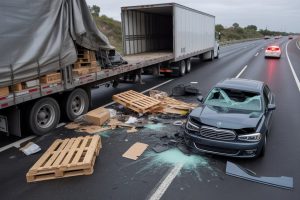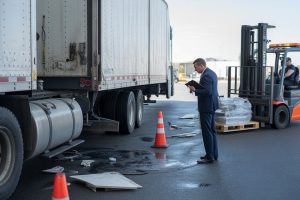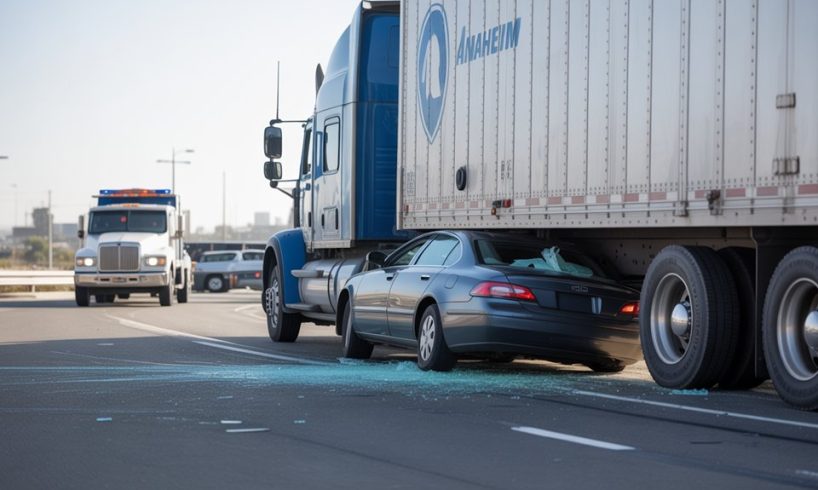
After a semi on the 57 in Anaheim rear-ends your car, you may assume the driver is to blame, but that’s not always true. You might find the carrier cut corners on training or maintenance, the shipper loaded cargo badly, or the manufacturer sold a faulty brake system. Each clue can shift liability, and the key facts aren’t always obvious at first.
Main Points
- Liability may rest with the driver, trucking carrier, shipper, maintenance contractor, or manufacturer, depending on what caused the crash.
- Trucking carriers can be liable for unsafe hiring, poor training, illegal schedules, or failing to enforce safety rules.
- Shippers may be liable when improper loading or cargo control causes a rollover, spill, or lost cargo.
- Maintenance contractors or manufacturers may be responsible if brake, tire, steering, or coupling failures contributed to the accident.
- Evidence like ownership records, load plans, maintenance logs, dispatch data, and phone or toxicology reports helps identify the liable parties.
Who Can Be Liable in an Anaheim Truck Accident?
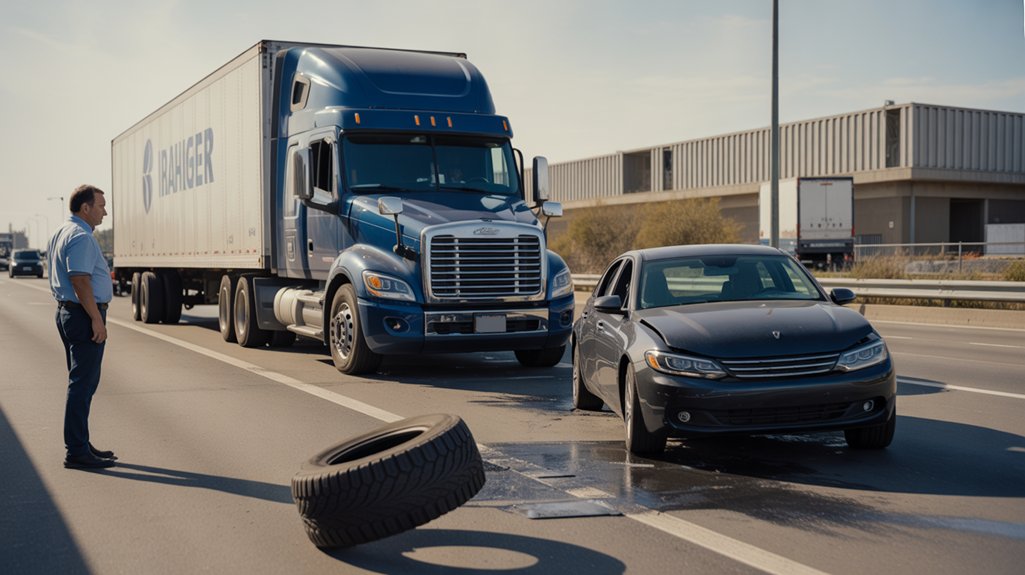
After a truck crash in Anaheim, liability can reach more than just the driver. You may also hold the trucking company responsible if it hired an unsafe driver, skipped training, or pushed illegal schedules.
Truck crash liability may extend beyond the driver to the trucking company, shippers, or maintenance providers.
A shipper can share blame when bad loading causes a rollover or lost cargo. You might also pursue a maintenance contractor if worn brakes, tires, or steering parts caused the wreck.
If a defective truck part failed, the manufacturer could face liability too. You should look at each company’s role, because multiple parties often contribute to the same collision.
A careful investigation can reveal who owned the truck, who controlled the load, and who serviced the vehicle, helping you identify every source of compensation for your injuries and losses.
When the Truck Driver Is at Fault
When the truck driver caused the crash, you may be able to hold that driver personally responsible for the harm you suffered. If the driver sped, texted, ran a light, or drove while impaired, you can point to that conduct as the direct cause of your injuries. You’ll need proof, so gather photos, witness names, police reports, and medical records right away. The driver’s own insurance may matter too, especially if you pursue a personal injury claim.
| Driver action | Possible fault | Evidence |
|---|---|---|
| Speeding | Higher crash risk | Skid marks |
| Distracted driving | Missed hazards | Phone logs |
| Impaired driving | Unsafe operation | Toxicology |
| Fatigue | Slower reaction | Hours records |
| Reckless turns | Impact collisions | Video footage |
A focused claim can help you recover costs and move forward.
How Carrier Negligence Can Share Liability
Even if the truck driver made the immediate mistake, the carrier may still share liability if its own negligence helped cause the crash. You can hold the trucking company responsible when it hired an unqualified driver, failed to train workers, ignored hours-of-service rules, or skipped required vehicle inspections.
Carriers also create risk when they push unrealistic schedules, allow unsafe maintenance practices, or don’t enforce safety policies. In an Anaheim truck accident, your claim may target both the driver and the company because employers are often liable for what their employees do on the job.
You’ll need evidence of dispatch records, maintenance logs, training files, and electronic driving data to prove the carrier’s role. When a company cuts corners, it may have to pay for the harm.
When the Shipper or Loader Caused the Crash
A truck crash in Anaheim isn’t always the fault of the driver or carrier. If you were injured, the shipper or loader may share blame when they packed the cargo wrong, overloaded the trailer, or ignored weight limits.
A poorly secured load can shift, spill, or tip the truck, making it hard for the driver to brake, steer, or stay upright. You’ll want to look at bills of lading, load plans, inspection records, and warehouse practices to see who handled the freight and how.
If a third party cut corners, you may have a claim against that company too. Proving fault often means showing the loading error directly contributed to the collision and your injuries.
Can a Truck Manufacturer Be Held Responsible?
Yes—if a truck had a defective part or design flaw, the manufacturer may share responsibility for an Anaheim crash. You could have a claim if a brake system failed, a tire blew due to a defect, steering locked, or a coupling part broke under normal use.
In these cases, you’re not just looking at driver error; you’re looking at product liability. You’ll need evidence that the truck left the factory with a dangerous defect, or that a safer design was available and ignored.
Maintenance records, recall notices, crash data, and expert inspections can help prove your case. If the defect contributed to your injuries, the manufacturer may owe damages alongside the driver, carrier, or other responsible parties, depending on how the wreck happened.
Frequently Asked Questions
How Long Do I Have to File a Truck Accident Claim in Anaheim?
You generally have two years from the truck accident date to file a claim in Anaheim, but shorter deadlines can apply if a government entity’s involved. Don’t wait; you should act quickly and protect evidence.
What Evidence Should I Gather After a Truck Accident?
You should gather photos, videos, witness names, police reports, driver and trucking company details, medical records, and damaged property evidence. Save everything, because you’ll need it to prove what happened and support your claim.
Can I Recover Damages if I Was Partly at Fault?
Yes, you can still recover damages if you’re partly at fault, though your award may be reduced by your share of blame. You should document everything, compare fault carefully, and speak with a lawyer promptly.
Will My Case Settle or Go to Court?
Your case’ll likely settle, but you may go to court if liability or damages stay disputed. You’ll usually negotiate first, and the strength of your evidence can push the other side to settle sooner.
How Are Truck Accident Claims Valued?
You value truck accident claims by adding your medical bills, lost wages, pain, future care, and property damage, then adjusting for fault, insurance limits, and evidence strength, because stronger proof usually boosts your recovery.
See The Next Post
Figuring out who’s liable in an Anaheim truck accident can feel like untangling a giant knot of wreckage, paper trails, and excuses. You might find the driver speeding, the carrier cutting corners, the shipper loading disaster onto the trailer, or the manufacturer hiding a defect that should’ve never hit the road. Don’t guess and don’t wait—dig into the evidence fast, because the right answer can change everything about your claim.