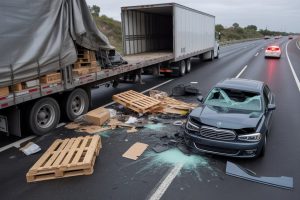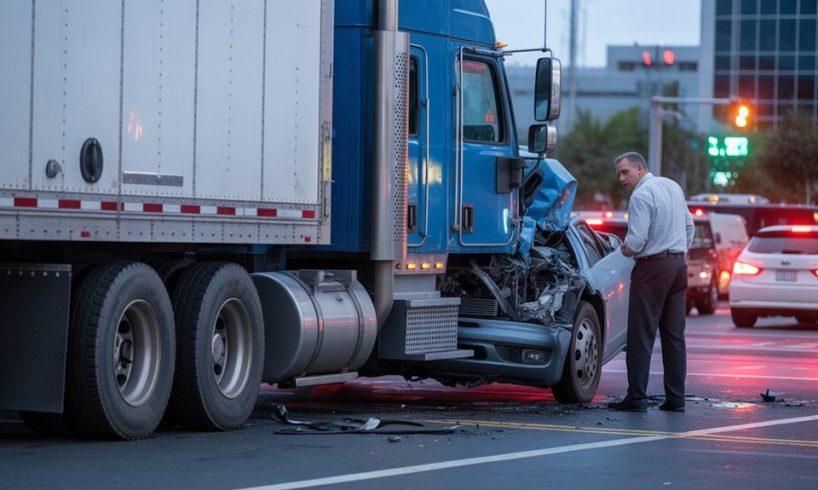
Like a bridge that has quietly weakened before the collapse, an FMCSA hours-of-service violation can turn a truck crash case in Anaheim from uncertain to compelling. If a driver pushed past federal limits, skipped required rest, or falsified logs, you may have proof of fatigue and preventable negligence. ELD data, dispatch records, and other records can expose pressure, missed breaks, and carrier oversight failures that raise the stakes of your claim.
Main Points
- FMCSA HOS violations like exceeding driving limits or skipping breaks can prove the truck driver was fatigued and negligent.
- Logbooks, ELD data, GPS records, and receipts can expose falsified hours, missing rest periods, and hidden driving time.
- Fatigue from HOS breaches can cause slower reactions, lane drift, microsleeps, and more severe Anaheim truck crash injuries.
- Carrier failures in training, supervision, and recordkeeping can show the company ignored safety rules and shares liability.
- Prompt preservation of dashcam, black box, and log evidence is critical because key proof can be overwritten or lost quickly.
What Counts as FMCSA Hours-of-Service Violations?
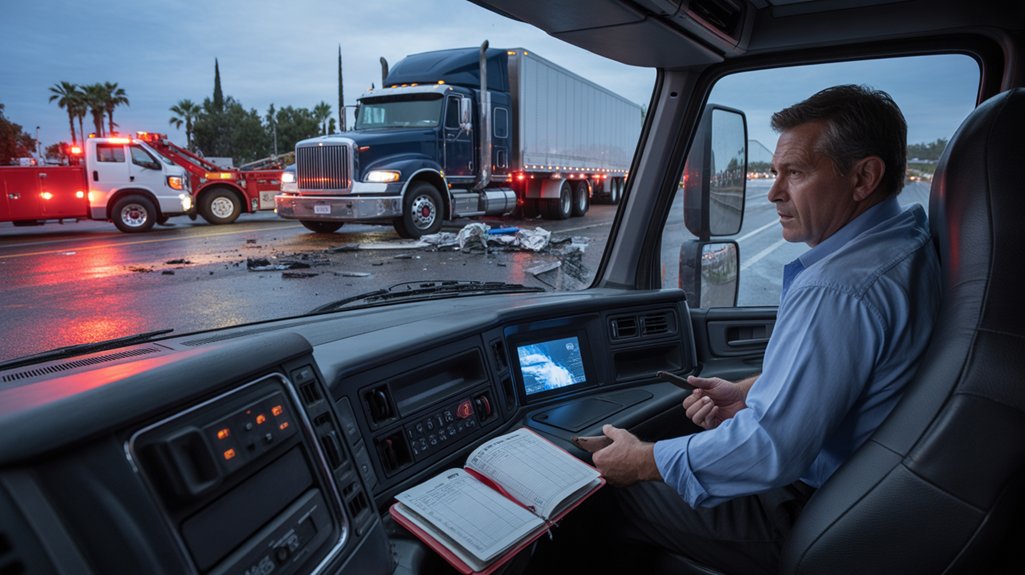
FMCSA hours-of-service violations happen when a truck driver or carrier ignores the federal limits on driving time, on-duty time, and required rest breaks.
You may see these violations when a driver exceeds the 11-hour driving cap after 10 consecutive off-duty hours, works beyond the 14-hour duty window, or skips the mandatory 30-minute break.
A carrier can also violate the rules by pressuring a driver to keep going, falsifying logs, or failing to use an electronic logging device properly.
These rules apply to most interstate commercial drivers, and they exist to reduce unsafe trucking.
If a crash involves one of these breaches, you can use it to challenge the carrier’s conduct and support your claim that it didn’t follow federal safety standards.
How Fatigue Hurts Anaheim Truck Crash Claims
When a truck driver is fatigued, your Anaheim crash claim can become much stronger because tired driving often shows a clear safety failure. You can argue that the driver missed hazards, delayed braking, drifted lanes, or made bad decisions that a rested driver likely wouldn’t make. Fatigue also supports your claim that the crash wasn’t a random mistake, but a preventable act of negligence.
| Fatigue sign | Crash effect | Claim value |
|---|---|---|
| Slower reaction | Late braking | Stronger fault proof |
| Lane drift | Side impact risk | Clearer negligence |
| Poor judgment | Unsafe maneuver | Better liability case |
| Microsleeps | Sudden loss of control | Higher damages support |
That evidence helps you connect the trucker’s condition to your injuries and the harm you suffered.
FMCSA Logbooks, ELDs, and Hidden Red Flags
Even if a truck driver claims they stayed within the rules, logbooks and ELD records can tell a different story. You can use those records to spot gaps, edits, and patterns that suggest something’s off.
Missing entries, repeated corrections, split shifts, or sudden changes in duty status may point to sloppy recordkeeping or pressure from a carrier. ELD data can also show whether a driver paused for mandated rest, moved the truck when the log says otherwise, or failed to sync information properly.
When you compare digital logs with fuel receipts, toll records, dispatch messages, and GPS data, you often uncover hidden red flags. Those inconsistencies can strengthen your Anaheim truck crash case by undermining credibility and showing the defense can’t fully trust the driver’s story.
Proving the Driver Broke Federal Driving Limits
You can prove a driver broke federal driving limits by comparing drive-time logs with the hours FMCSA rules allow.
You’ll also want to check whether mandatory rest breaks were missed, because those gaps often show up in the records.
Electronic data from ELDs, GPS, and dispatch systems can confirm when the driver was actually on the road.
Drive-Time Log Violations
Proving drive-time log violations starts with showing that the truck driver exceeded the federal hours-of-service limits or falsified records to hide it. You can use electronic logging device data, fuel receipts, toll records, GPS traces, dispatch messages, and witness statements to compare the driver’s reported time with real-world movement. If the logs don’t match the truck’s location or activity, you’ve got powerful evidence of a federal violation.
You should also look for altered entries, missing segments, duplicate miles, or suspicious gaps that suggest the driver tried to conceal extra driving. These records matter because they can show the driver pushed past legal driving limits before your Anaheim crash. That proof can help you link fatigue, unsafe decisions, and the collision more directly.
Mandatory Rest Break Breaches
Rest-break violations often show up in the same records as logbook issues. When a truck driver skips required off-duty time, you can argue that fatigue played a role in your Anaheim crash. Federal rules limit how long a driver can stay behind the wheel before taking a break, and those limits exist to reduce deadly mistakes.
If the driver kept rolling through mandatory rest periods, that breach helps you show the carrier ignored safety rules. You can use that evidence to challenge the driver’s claimed alertness and the company’s supervision practices. A missed rest break may also support your claim that the driver was rushed, overworked, and unsafe on the road. That matters because proving a federal hours-of-service violation can strengthen liability and damages.
Electronic Data Evidence
Electronic data can often crack open the truth about how long a truck driver was really on the road. You can use ELD logs, GPS records, engine timestamps, fuel receipts, and dispatch messages to show when the driver started, stopped, and kept going past legal limits. These records may reveal skipped breaks, false log entries, or time behind the wheel that exceeds FMCSA rules.
When you compare electronic data with witness accounts and crash timing, you can expose a pattern of fatigue and noncompliance. In your Anaheim truck crash case, that proof can strengthen fault arguments and support damages. Electronic records don’t lie easily, and they often tell a story that paper logs try to hide.
How Carrier Oversight Can Strengthen Your Case
Carrier oversight can strengthen your case when safety audits show a pattern of ignored hours-of-service rules.
Gaps in dispatch logs can reveal missed oversight or altered records, and weak compliance training can point to broader failures by the carrier.
When you connect these issues, you can show the crash wasn’t just one driver’s mistake.
Carrier Safety Audits
When a crash involves a commercial truck, you should not focus only on the driver’s conduct; carrier safety audits can reveal whether the company ignored warning signs, cut corners on training, or failed to enforce hours-of-service rules. You can use audit findings to show a pattern of poor oversight and unsafe practices.
| Audit issue | Why it matters |
|---|---|
| Safety management | Shows whether the carrier policed compliance |
| Driver qualification files | May expose hiring or retention problems |
| Training records | Can reveal weak instruction on rest rules |
| Violation history | Helps prove repeated disregard for safety |
| Corrective action | Shows whether the carrier fixed known risks |
These records can support negligence claims and increase pressure on the carrier’s insurer.
Dispatch Log Gaps
Dispatch log gaps can quickly expose where a trucking company dropped the ball. If the carrier can’t show who assigned the load, when the driver was dispatched, or how route changes were tracked, you can argue that oversight was weak. Those missing records may also line up with hours-of-service violations, helping you connect fatigue to the crash.
- Empty entries can suggest the company didn’t monitor drive-time limits.
- Inconsistent timestamps may reveal pressure to keep a truck moving.
- Missing updates can support a claim that the carrier ignored warning signs.
You can use these gaps to challenge the company’s version of events and to show the jury that safer dispatch practices might’ve prevented the wreck. Strong counsel will compare logs, trip sheets, and electronic data to build your case.
Compliance Training Failures
If a trucking company doesn’t train drivers and supervisors on hours-of-service rules, logbook accuracy, and fatigue reporting, you can turn that oversight into powerful evidence.
Poor training often means the carrier knew, or should’ve known, that its people were making preventable mistakes. You can use that failure to show negligent supervision, weak safety culture, and a disregard for federal requirements.
When a driver miscalculates drive time, skips rest breaks, or falsifies records, training materials, meeting notes, and onboarding files may reveal the company never taught proper compliance. That helps you connect the crash to carrier misconduct, not just driver error.
In Anaheim truck crash cases, this evidence can support claims for negligence and strengthen pressure for full compensation.
Violations That Point to Negligence Per Se
Certain FMCSA hours-of-service violations can strongly support a negligence per se claim because they show a driver or carrier broke safety rules designed to prevent fatigue-related crashes. If you can prove the violation, you may not need to argue over whether the conduct was careless in the ordinary sense. The breach itself helps establish fault, especially when the rule was meant to protect you from the exact harm you suffered.
- Driving beyond the 11-hour limit
- Skipping the 30-minute break
- Falsifying logbooks or ELD data
These violations can sharpen your case by tying the crash to a concrete safety failure. They also help frame the carrier’s conduct as more than a simple mistake, showing a disregard for mandatory federal limits and your safety.
Evidence That Supports Higher Compensation
Evidence that shows the full scope of a trucking violation can substantially increase your compensation claim. When you prove the driver exceeded federal hours limits, you can connect that conduct to worse injuries, a harder impact, and longer recovery.
Logs, dispatch messages, fuel receipts, toll records, and device data can reveal fatigue, skipped rest breaks, and unsafe pressure from the trucking company. Medical records then help you show how that exhaustion made the crash more severe and your treatment more expensive.
You can also use proof of missed work, reduced earning ability, pain, emotional distress, and future care needs to justify more compensation. Strong evidence doesn’t just show fault; it helps you demonstrate the true financial and personal toll the crash took on your life.
How a Truck Accident Lawyer Uses HOS Records
A truck accident lawyer uses hours-of-service records to reconstruct the driver’s schedule and show whether fatigue played a role in the crash. You can’t rely on guesswork when the logbook, electronic logging device data, fuel receipts, toll records, and dispatch messages tell a clearer story. Your lawyer compares those records with crash timing, rest breaks, and route length to spot illegal driving, missed off-duty periods, or falsified entries.
Hours-of-service records can reveal fatigue, skipped breaks, and falsified logs that help prove negligence.
- Identify patterns of overdriving and skipped breaks
- Match logs against GPS and delivery records
- Use inconsistencies to challenge the carrier’s account
That analysis helps you connect fatigue to negligence and explain why the carrier should answer for the harm you suffered.
Why Acting Fast Protects Your Truck Crash Claim
Right after a truck crash, time works against you. You need to act fast because evidence disappears quickly. The truck can get repaired, cleaned, or put back on the road. The driver may change logs, and the carrier can overwrite electronic data. Skid marks fade, witnesses forget details, and surveillance video gets deleted. If you wait, you give the defense room to shape the story.
When you move quickly, you can preserve HOS records, dashcam footage, maintenance files, and black box data before they’re lost. You also protect your medical claim by documenting symptoms early and following treatment. Prompt action helps your lawyer build a stronger case, prove violations, and push back before the trucking company controls the narrative.
Frequently Asked Questions
Can FMCSA Violations Affect Punitive Damages in California Truck Cases?
Yes—FMCSA violations can help you seek punitive damages in California if they show reckless, malicious conduct. You’ll still need clear evidence linking the violations to the crash and proving the driver or company’s conscious disregard.
Who Can Subpoena a Truck Driver’s ELD Data After a Crash?
You can subpoena ELD data through your attorney; courts, insurers, and law enforcement often do too. FMCSA estimates hours-of-service violations contribute to many crashes, and you’ll want those records fast before they’re overwritten.
Do Independent Contractors Still Have FMCSA Hours-Of-Service Duties?
Yes—if you drive a commercial motor vehicle in interstate commerce, you’re generally bound by FMCSA hours-of-service rules, even as an independent contractor. Your status doesn’t erase safety duties, logging, or fatigue limits.
Can a Defense Lawyer Challenge False Logbook Entries in Court?
Yes—you can challenge false logbook entries in court by using dispatch records, GPS data, fuel receipts, and witness testimony. You’ll attack credibility, expose inconsistencies, and argue the logs don’t match actual driving time.
Are Bilingual Drivers Treated Differently Under FMCSA Compliance Rules?
No, you’re held to the same FMCSA rules—language skills don’t buy you a loophole. You still need accurate logs, safe operation, and compliance. If an employer pressures you, you can challenge it.
See The Next Post
If you were hurt in an Anaheim truck crash, FMCSA hours-of-service violations can do more than suggest fatigue—they can help prove negligence. When you investigate the driver’s logs, ELD data, and dispatch records, you may uncover a pattern of pressure, missed breaks, and unsafe driving limits. Those facts can strengthen your claim, support higher compensation, and show why the carrier should’ve prevented the crash. Act fast, because key evidence can disappear quickly.